Beta with real users · paid launch Q1 2027
Jobs.Dog A job search app with an AI assistant that runs your search.
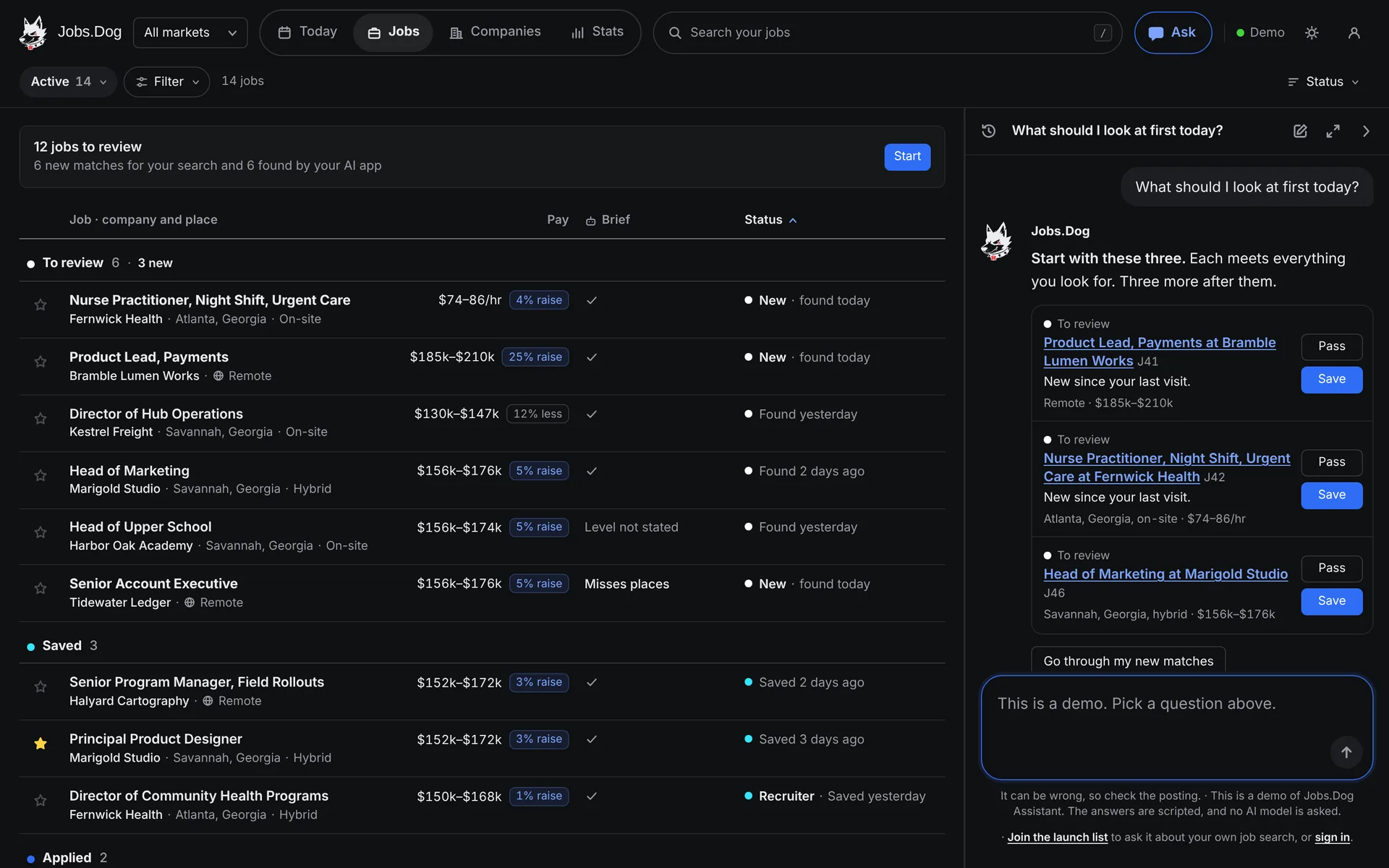
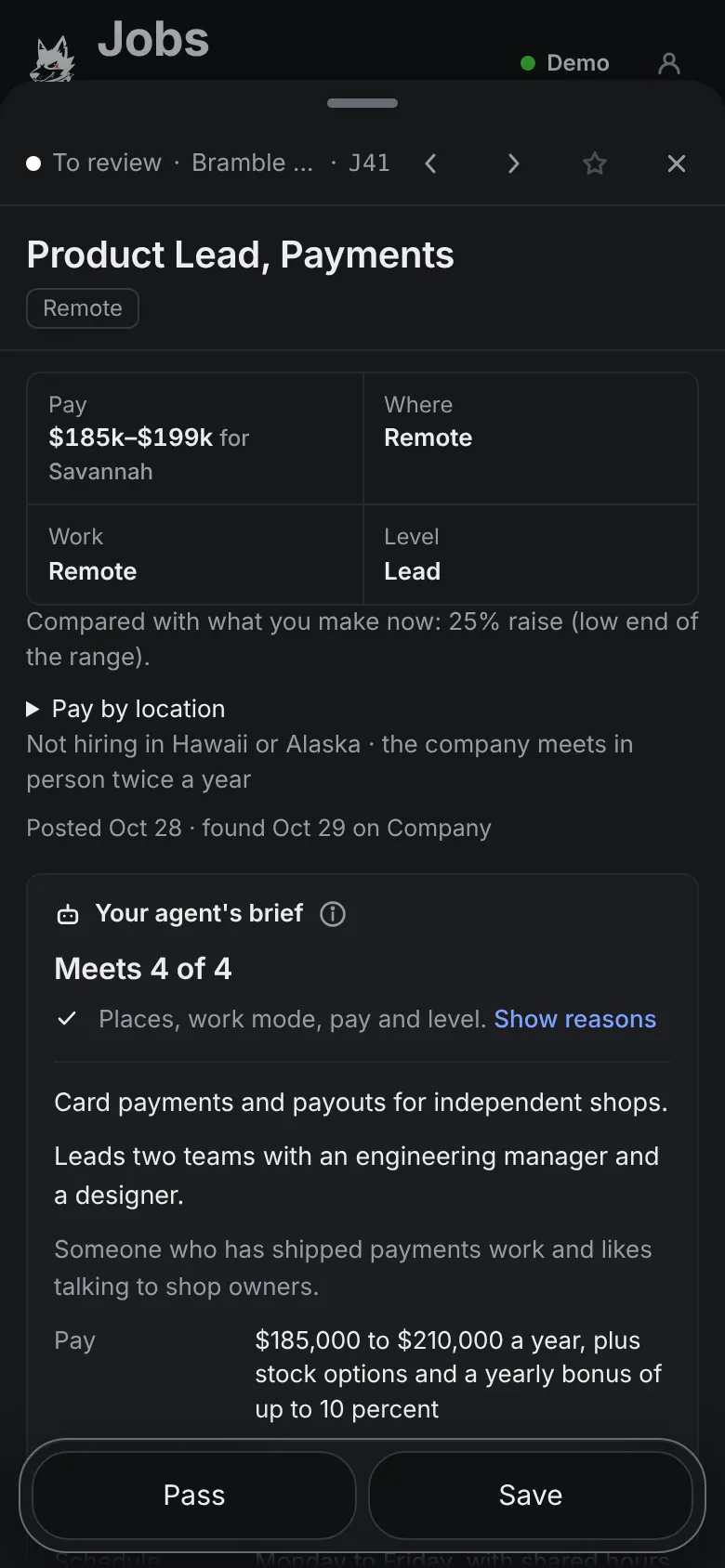
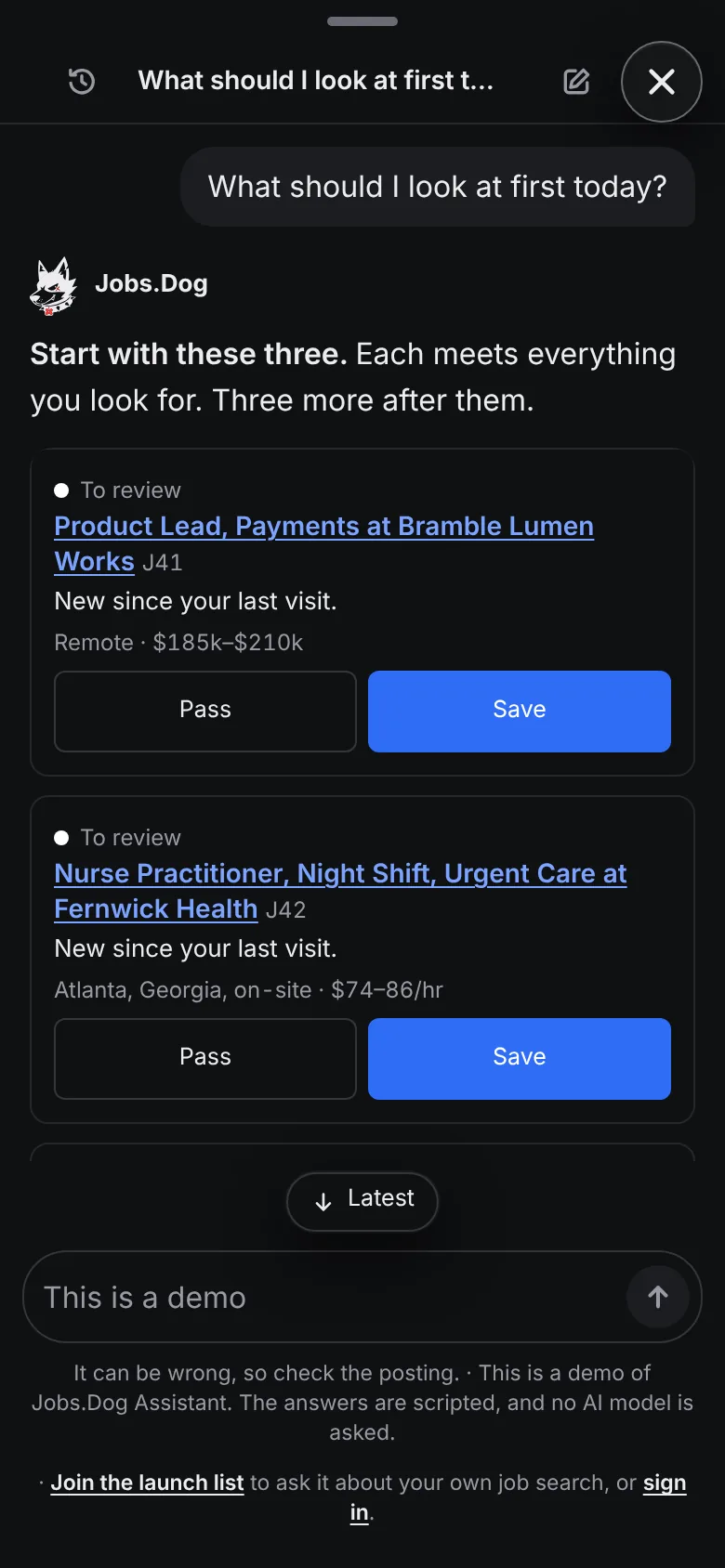
Jobs.Dog is a job search app with its own AI assistant, and I build all of it myself. The assistant asks what you want, searches listings from thousands of US employers, cuts them down to the jobs that fit, and talks you through each one: why it fits, what’s missing, what to do next. Everything lands on one board that keeps every job, application and note. A search now takes about 108 days to reach a first offer, and most AI job tools answer that by sending hundreds of applications for you. Jobs.Dog aims each one. It began as a memory for the AI people already use, through an MCP server, and that path still works. Real people are using it now in an early friends-and-family beta, and I’m opening it to paying customers in Q1 2027.
What I set out to learn
I wanted to find out whether one person, directing AI, can take a product from nothing to a paid launch: the app, the brand, the marketing site, the infrastructure and the security, with no team behind it. Years of system design and of leading teams across product areas are what let me move that fast without stopping to wait on an expert for each part. The brand was its own lesson: the logo, the style, the words on every page and the app's voice, built from zero.
The hardest part
Information security. Jobs.Dog is built to hold résumés and personal details, and its assistant is an AI agent people can talk to freely and ask to do almost anything on their account. Keeping it from being exploited, from wandering into tasks it shouldn’t do, and on the job the person asked for is the hardest problem in the product, and the threats change almost daily. Every person’s data is walled off in the database itself, and text inside a posting never counts as an instruction. Partners I’ve met along the way have helped me harden it, and so far nothing critical has turned up.
The app itself
Built solo, end to end
- The product: every page layout, the board, the assistant’s chat, onboarding, settings, and a browser extension.
- The art: I drew the reference sprites and poses for the mascot, and artist friends redrew them into the finished pieces.
- The back end: the Postgres schema on Supabase, the job catalog that reads company career sites and job feeds, the matcher, the MCP server and its OAuth, and Stripe billing.
- The infrastructure: email through Resend, logs, uptime checks and alerts in Better Stack, product analytics in PostHog, and deploys on Vercel behind a gate that checks the database schema.
- The cost controls: dashboards that track what every AI API call costs, a daily spend cap on the assistant, rate limits, and a kill switch for each AI door.
- The abuse controls: guardrails that catch people trying to talk the AI past its rules, and the rule that text inside a posting never counts as an instruction.
- A job market tracker: a daily count of open jobs by place and kind, so I can read the trends.
The market it’s built for
- Huntr’s Q1 2026 report, 139,927 applications from 25,635 job seekers, put the median time to a first offer at 108 days, up from 83 the quarter before.
- In the same data, people who sent 11 to 20 applications turned 9.25% of them into interviews; people who sent more than 100 turned 2.58%.
- Two-thirds of the searches that ended in an offer ended within 50 applications.
- Tailored résumés got interviews at about twice the rate of untailored ones: 4.23% against 2.07%.
- Greenhouse counted 116 applications per job in 2022 and 244 in 2025. Once AI writes the application, the people reading it learn less from it (Galdin and Silbert, 2025).
- In a French randomised trial of about 800,000 job seekers, applications sent to recommended employers worked 2.7 times as well as applications to the average firm (Behaghel and others, 2024).
Huntr’s numbers come from its own users, self-reported, and show a correlation: people who land interviews early stop applying, so the 100-plus group fills with searches that were already going badly. I built for what the stronger studies support: send each application to a job that fits.
Sources: Huntr, Q1 2026 Job Search Trends Report; Greenhouse, The Hire Standard; Galdin and Silbert, Making Talk Cheap; Behaghel and others, IZA DP 16781.
Decisions on Jobs.Dog
The assistant runs the whole search27 Oct 2026
Why it matters Jobs.Dog began as a board for the AI a person already uses. Most people looking for work don’t run an AI connector, so I made the built-in assistant able to do every part of the search on its own: setup, finding jobs, reviewing them and tracking applications. People who like their own AI keep that path, and both work on the same board.
Fewer, better-aimed applications27 Oct 2026
Why it matters Some AI tools send a thousand applications a day. Recruiters filter that volume out, and in Huntr’s data the interview rate per application falls as the count climbs. I put Jobs.Dog’s effort into finding the jobs that fit while they’re new, and left the applying to the person, one job at a time.
Paid launch in Q1 2027, after the holidays
Why it matters Hiring slows to a crawl in November and December. Launching into it would show new customers a thin board and give me little to learn from, so I’m testing with real users through the holidays. Meanwhile Jobs.Dog counts the open jobs every day, by place and kind, so I go into the launch knowing how the market moves.